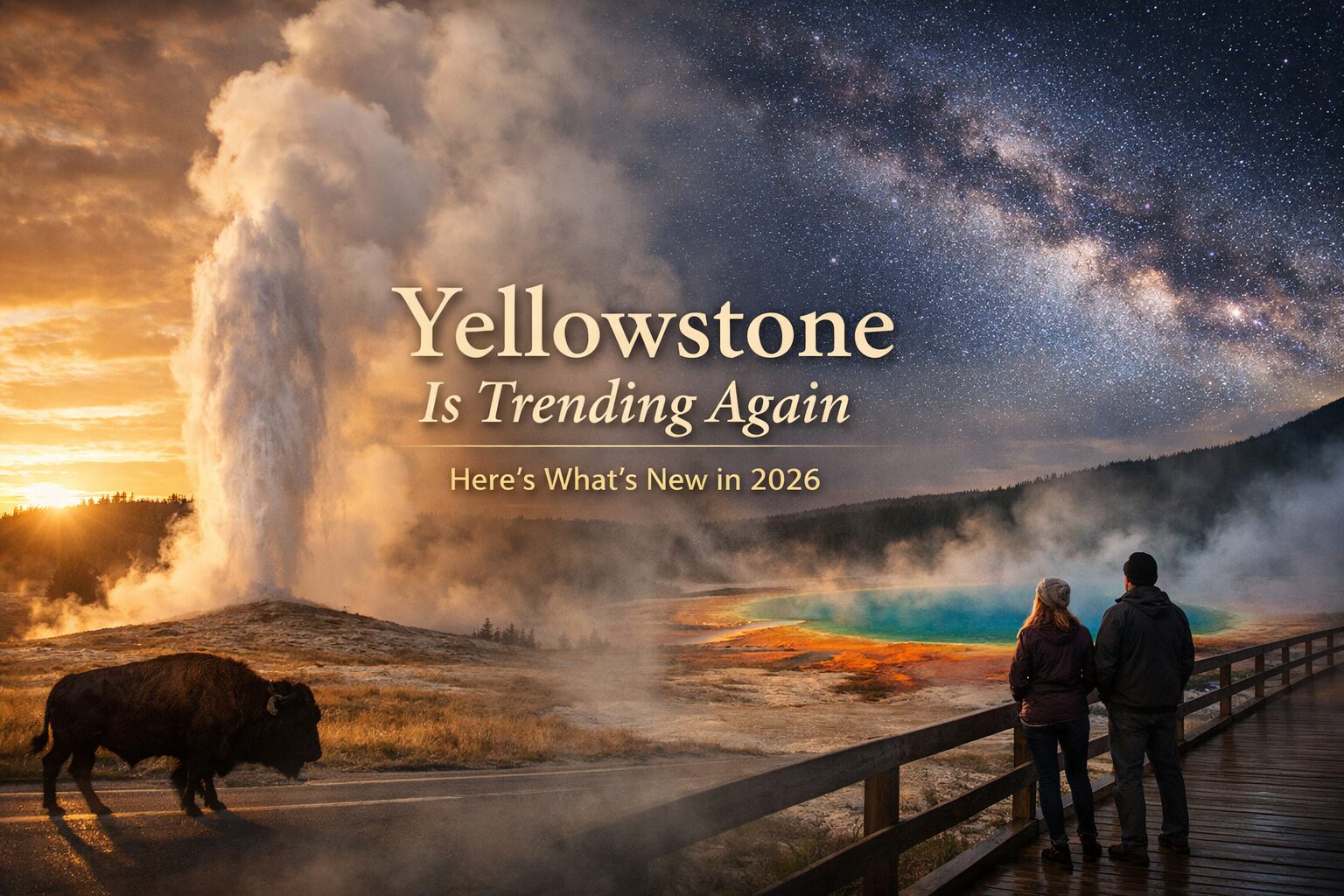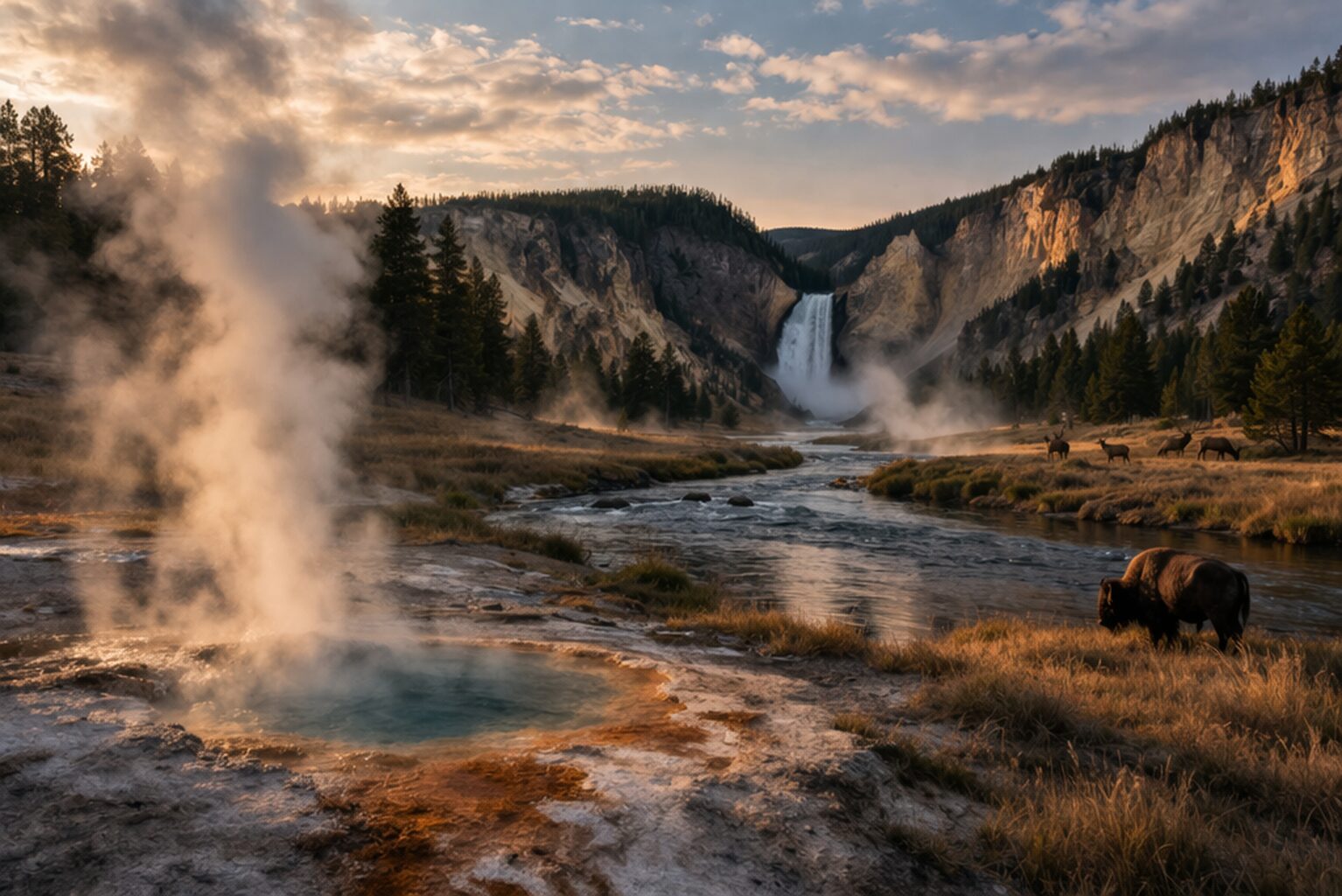
Old Faithful and wolves seen in Yellowstone
- Kajal Singh
- March 26, 2026
- Tour, Travel
- Yellowstone National Park Guide
- 0 Comments
Yellowstone sits differently than most places people go. Not eager to wow anyone. No need to show off. Quiet strength fills the space instead. Power lives there without noise.
Steam rises from the earth in Yellowstone, where rivers slice through rock while animals roam like people are just visitors. Not everything shows up at once; this place arrives slowly, a flash of movement, then silence, yet sticks around in your mind anyway. A scent drifts by early one morning, followed hours later by the echo of water falling over stone. Each part lands differently, none feel planned, all remain long after leaving.
This Yellowstone national park guide skips checklists, focuses on moving through the park, pace slow, eyes open. How you travel matters most here, not just where.
The Rhythm of Old Faithful Yellowstone National Park Guide
Most folks know about Old Faithful eruption times well before they pack their bags for this place. Not every natural sight delivers like it promises, this one does.
Not merely the blast gives it fame, the timing does. What stands out? Not only fire bursting forth but also how it pulses, again and again.
Out here, folks stand still, eyes on boards showing when Old Faithful might blow, yet clocks fade once feet touch ground. Waiting slips into the moment like breath slowing at dusk. A breeze moves through hair. Steam curls upward, changing shape without warning. Quiet grows thicker than expected.
Eruptions usually pop up about every hour and a half, with times listed close by. Still, truth be told, showing up ahead helps, just wait it out. Patience gets you further here than any timetable ever could.
Where the Wild Still Roams
It moves differently, Yellowstone, like the ground breathes under your feet without warning. A hush breaks into an elk call. Steam curls off rocks where water remembers fire. You stand inside a pulse. Not magic, just earth doing what it does, louder here.
Suddenly, motion halts, tires pause mid-roll, figures emerge without sound, lenses stretch toward the horizon. Odds are high that what’s out there moves on four paws or wings. Stillness like that rarely happens by accident. It pulls everyone in, eyes fixed past roads, focused beyond pavement.
Now and then, bison step onto the pavement, moving slowly. Open fields bring elk into view, most often when the sun first rises. On a rare morning, something less common could show up instead.
You know what is the best time to visit Yellowstone National Park and what grabs most people’s attention? Spotting a gray wolf out in Yellowstone.
Out here in Lamar Valley, something shifts at dawn. Wolves move then, also near dusk. Sightings aren’t guaranteed, maybe only a flicker far off, a dark line on open ground, yet those moments stick. Not seeing everything makes it real.
A gray wolf sightings in Yellowstone was seen out there, no shouting, just silence settling in. That moment pulls your thoughts away from noise, drops them into something older. Life keeps going, even where we aren’t watching.
When to Go to Yellowstone National Park
Autumn arrives with sharp air, then elk call from golden hillsides. Winter grips hard, turning geysers into ghosts beneath frozen stars.
Out here, spring acts like a fresh start. Meltwater feeds swollen creeks while fawns show up in tangled underbrush. The air carries less weight now, fewer people wander trails, though storms still drift in without warning.
Mornings hum with birdsong when trails first light up. Busy paths wind past lakes where otters dive below ripples. Peak weeks swell near waterfalls, tents cluster on hilltops. Valleys echo with elk calls, not loud, just present, while footsteps on trails meet fewer people each week. Peace shows up slow, though it sticks around longer now. Grounded means something different here: less rush, more space between thoughts.
Frost changes everything. Blankets of white smother the hills, paths vanish under drifts, yet the stillness grows heavier when the playground empties. The scenery holds charm, though preparation matters more now. Footprints gone, silence takes hold in its own way.
Fresh breezes greet early walkers as September settles in quietly. Hikers keep moving through paths, though numbers thin out gradually. The chill at dawn cuts clean, stirring alertness with each breath. Animals show themselves more, venturing close when temperatures drop. Routes remain passable while space opens up for those who wander slowly. The heat of August slips away, frost of January lingers far off behind the clouds. So beautiful to visit once in a long life.
Yellowstone Wildlife Watching Tips
Paying attention is what changes everything. A handful of small changes might help quite a bit Early hours bring movement. As light spills across the land, creatures stir. When day slips into night, motion returns. The world hums softer then, less crowded, more alive.
Hang on. It might take more time than you think, yet stillness slips in along the way. Moments stretch when you least anticipate them, though they belong just the same. Stay back. Not because someone in the corner said that, but because it matters. Watch what people do around you. When vehicles sit still or crowds form, odds are something’s going on close by.
Patience shapes most moments worth seeing here. Instead of rushing, wait quietly, animals appear when they choose.
Adventures Things to Do In Yellowstone
It packs plenty of things to keep anyone busy, yet tackling it all in one go rarely works. Floor hot underfoot near the geyser zones. Trails on planks carry you past steaming vents, where wet sounds rise from below, mist curls between trees. Nothing compares, really.
After that comes the Grand Prismatic Spring, vivid hues shift under light, strange but true up close. Far below, the river cuts through rock in shades no photo shows. From rim to drop, colors shift like layers peeling under sky.
Worthwhile, those short walks. Step off the pavement, suddenly the noise fades, replaced by something slower, wider, yours. The land speaks when traffic doesn’t shout.
Stopping sometimes leads to the finest times. These appear not by schedule, but through lingering past your usual pace, noticing what surrounds you.
Three Day Yellowstone Plan
A short visit? Three days in Yellowstone might be brief, yet it holds real depth. Time tightens, but moments stretch near steaming pools and wide skies. Skip the rush, pace finds its own rhythm beside bison trails and sudden geysers. Lets see Where to stay near Yellowstone and what to do everyday.
Day One Geyser Fields
The best pick for 1st day is you can head toward Old Faithful and the Upper Geyser Basin. You can see how hot water shoots up suddenly, while stones hum underfoot, warm air drifting through pine gaps.
Day Two Across Canyons With Vistas
Start from the Grand Canyon of Yellowstone. From each overlook, take in the drops of the falls, give them time. Instead of hurrying, let moments stretch where the river cuts deep.
Day Three Wildlife and Valleys
Early mornings bring movement, head into Lamar Valley when the light is low. Wolves slip through mist, bison nudge frost-covered grass, elk stand still between bare trees. The land feels quiet then, alive beneath the surface.
Good Places to Stay Close to Yellowstone
Staying close to Yellowstone might change how you see everything. Yellowstone National Park Guide helps you to find where to explore. You rest each night plays a big part in what happens during the day.
Inside the park, you reach key spots sooner while feeling more connected to the surroundings. Since lodges and cabins book fast, getting things sorted early makes a difference.
A short drive from the park entrance sits West Yellowstone, a spot that’s handy for visitors. With lots of choices nearby, getting to well-known spots feels simple from here.
Fewer people wander through Gardiner, just by the northern gate. A slower rhythm lives there. Out here, mornings begin with trees brushing the sky instead of walls closing in. Forest air fills your lungs before coffee even brews. Space stretches wide where horizons stay clear, not blocked by rooftops or noise.
Staying somewhere sets the scene, yet the real weight lies in how each day unfolds after arrival. Movement shapes more than location ever could.
The Quiet Magic You Never See Coming
What stays with you after Yellowstone isn’t always the big, famous spots. Small things stick around longest. Moments that barely seem to matter somehow stay put.
Morning light touches the edge of rising steam above water. Silence falls between words as eyes turn toward what moves far off. Air travels low over empty ground, carrying nothing but its own voice.
What Yellowstone does isn’t about fun. Instead, it asks you to pause.
Maybe it’s the steam rising from Old Faithful, maybe it’s the silence after. A pause grows while waiting, eyes scanning distant ridges where wolves sometimes move. The air changes without warning. Moments blur, gazing at boiling water one second, chasing whispers of pawprints the next. Something inside adjusts, like a compass turning. Not planned, not forced. Just there, when you least expect.
Silence settles in. Pace drops low. The world feels closer to what it actually is.
Conclusion
Trails lead where signals fade, offering space to notice small things, steam rising off rocks, birds calling across valleys. Decisions matter less once you’re inside it, walking beside rivers that cut deep into rock. Plans give structure, though what stays with you comes unannounced.
What matters in the Yellowstone National Park Guide? Paying attention. Not piling on tasks. Seeing what’s already there, instead of chasing something new. Nothing feels planned. Each second unfolds on its own terms.
Perhaps that is the reason it lingers in your mind. A trace stays behind, even when you are gone, inside the hush, among untamed growth, wherever green things shift without asking. Enjoyed the article, follow dturban for more fashion, lifestyle, health and travel updates.