Why Gen Z Travelers Are Suddenly Obsessed With Yellowstone
- Nikhil Rana
- March 23, 2026
- Travel
- yellowstone national park
- 0 Comments
Okay so I was scrolling through TikTok the other night (as you do) and I swear every third video was someone my age standing in front of a steaming rainbow-colored hot spring or getting absolutely pied in the face by a bison jam. And I kept thinking, wait, Yellowstone? Like the old people national park with the geysers?
Turns out I was totally wrong about that one.
Yellowstone travel for Gen Z has quietly become A Thing and honestly the more I looked into it the more it made sense. Like perfect sense. So I wanted to sit down and actually figure out what’s going on here because this isn’t just another travel trend that’s gonna disappear in six months. There’s something real happening.
We’re Not Buying Stuff Anymore
Here’s the thing that actually surprised me. There’s this study from Klook that came out recently looking at Gen Z travel trends 2026 and the numbers are kind of wild. 88% of us are either keeping our travel budgets the same or increasing them this year. But here’s the kicker – we’re cutting back on shopping and random purchases to do it.
Think about that for a second. We’re literally choosing experiences over buying things. Which honestly feels right because when was the last time you remembered some shirt you bought three years ago versus that time you saw something that made your jaw actually drop?
“When faced with rising costs, travelers are choosing to cut back on shopping and material purchases rather than on activities and experiences,” the study found.
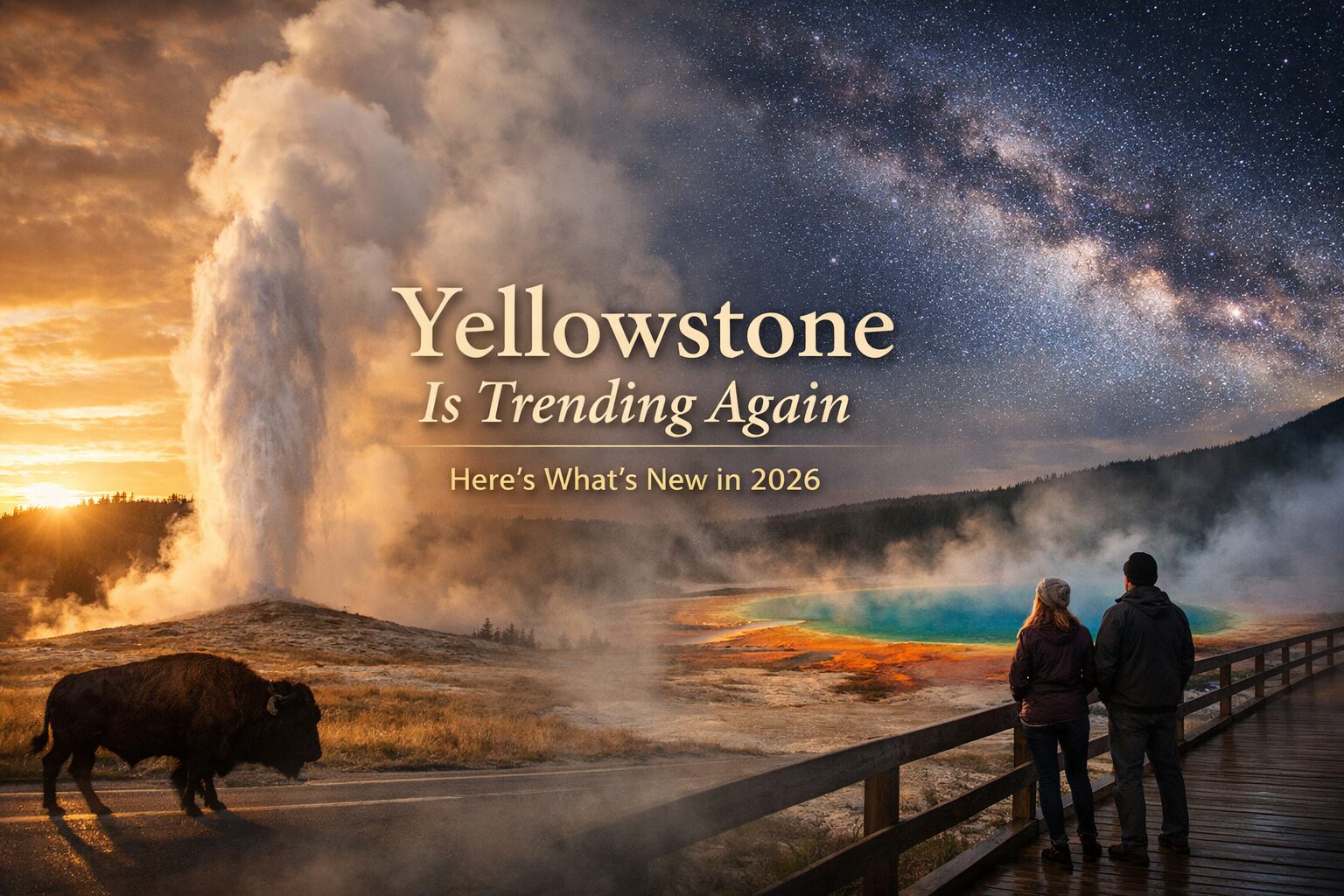
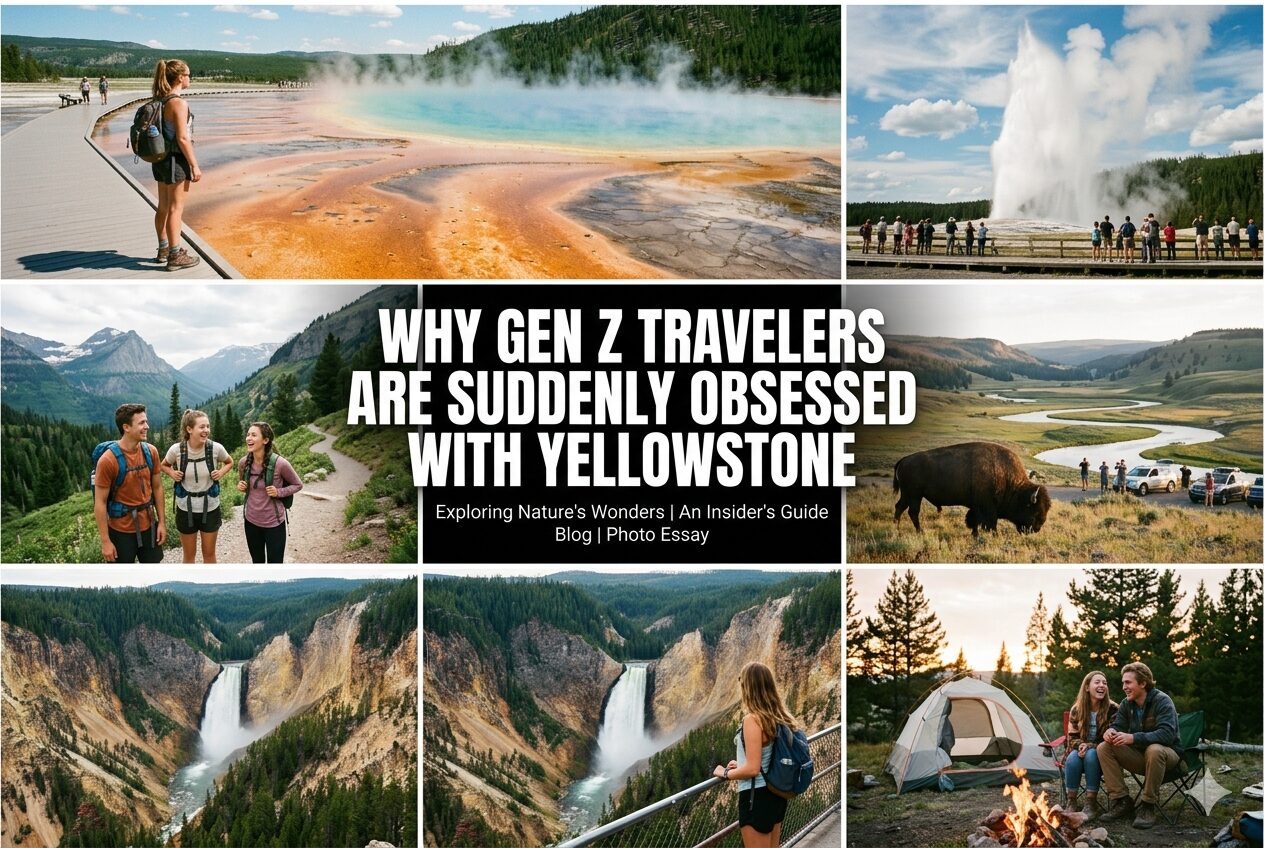
And Yellowstone is basically the ultimate experience factory. You’ve got geysers shooting water a hundred feet in the air. You’ve got wildlife just wandering around like they own the place (they do). You’ve got canyons and waterfalls and hot springs that look photoshopped but they’re just real. Sitting there. Doing their thing.
Aishia Mills runs tours in Gardiner and she put it pretty simply: “Yellowstone’s always going to be a prized destination”. For a generation that wants stories more than stuff? Yeah that checks out.
Let’s Be Real About The Photos
I’m not gonna sit here and pretend social media isn’t part of this. Because it absolutely is. Yellowstone Instagram locations are basically their own genre of content at this point.
The same Klook study says 80% of travelers admit social media influences where they go and what they book . But it’s not as shallow as it sounds I don’t think. When you see someone’s video of the Grand Prismatic Spring from above – that insane shot where it looks like a giant rainbow eye staring up at the sky – it’s not just about getting the same photo. It’s like proof that places like this actually exist. That you can stand there and feel the steam on your face and see those colors with your own eyes.
The best Yellowstone spots for young travelers tend to be the ones that hit that sweet spot between photogenic and genuinely mind-blowing in person. Artist Point overlooking the Lower Falls? The kind of view that makes you put your phone down after one photo because you just want to stare. Lamar Valley right before sunset when the light turns everything golden and you can spot bison dotting the grassland? That’s the stuff that stays with you.
One traveler who visited recently put it perfectly when they described seeing the Grand Prismatic Spring and realizing “those unreal photos you see online are real”. There’s something about that moment when the internet stops lying to you and the world actually delivers.
The Hike That Actually Gets You The Good View
Okay so here’s something I love about how people my age travel. We’re not content to just stand on the designated platform with everyone else. We want the view that requires a tiny bit of effort. Nothing insane. Just enough that you feel like you earned it.
That’s why places like the Fairy Falls Overlook have become legendary. Yeah sure you can see Grand Prismatic from the boardwalk at ground level and it’s cool whatever. But the people who make the short hike up to the overlook? They’re the ones getting that sweeping rainbow panorama that makes everyone in the comments ask “where even IS that??”
Same with Storm Point. While the crowds are fighting for parking at the more famous pullouts, there’s this peaceful trail along Yellowstone Lake with rocky shoreline and water that reflects the sky like a mirror. It feels like your own private discovery even though obviously lots of people know about it. The difference is you actually went there.
This fits with what the travel research is showing. Young travelers are actively looking for stuff beyond the main attractions. Major gateway cities are becoming starting points rather than final destinations. We want space to breathe. We want to feel like we found something.
The Budget Reality Because Money Is Real
Let’s talk money because I know that’s on everyone’s mind. Yellowstone travel for Gen Z doesn’t have to mean “Yellowstone travel for rich kids.” Some of the best stuff in the park costs nothing once you’re through the gate.
Entrance for U.S. residents is $35 for a weekly pass (international visitors now pay $135 which is helping fund park improvements). But here’s a pro tip I wish someone had told me earlier – if you’re planning even two national parks trips in a year, the America the Beautiful Pass is $80 and pays for itself immediately.
Once you’re inside, your entertainment budget is basically zero. Driving through Lamar Valley and Hayden Valley gives you wildlife viewing that people pay thousands for on African safaris. We’re talking bison and elk and bears and wolves – the whole cast of a nature documentary just living their lives while you watch from your car window.
Camping at Madison or Canyon Campgrounds inside the park is the cheapest way to stay . And food? Pack a cooler. Seriously. There’s something weirdly nice about eating sandwiches at the Madison River Picnic Area while keeping an eye out for eagles. It feels like the right way to do it somehow.
One family who visited recently shared their strategy, and it’s honestly genius: “starting early with sweatshirts and a car full of snacks” was their secret to a full day without spending extra money. That’s the kind of practical wisdom that actually makes a difference when you’re budgeting.
How We Actually Plan Trips Now
This part kind of blew my mind. Apparently 91% of global travelers now use AI for trip planning. Read that again. Almost everyone is getting help from artificial intelligence to figure out itineraries, research destinations, manage budgets.
But here’s the interesting loop. Social media gives us the spark – 80% of us see something that makes us want to go. Then AI helps us figure out if it’s actually possible. You see a viral video of the Grand Prismatic Spring, get that “I need to go there” feeling, and then ask ChatGPT or whatever to help you map out a route that hits all the Yellowstone Instagram locations without destroying your bank account.
It’s kind of a perfect system honestly. The inspiration feels real and human (coming from actual people’s experiences), and the planning becomes manageable (thanks to technology doing the heavy lifting).
Winter Is The Secret Move
Okay here’s something most people don’t know. Some of the best Yellowstone travel for Gen Z happens when everyone else is home wrapped in blankets.
Winter in Yellowstone is a completely different planet. Summer brings nearly a million people through the gates in July alone. Winter sees about 2,000 visitors per day. Imagine watching steam rise from geothermal vents while snow falls around you and a wolf trots past in the distance. That’s not a metaphor someone made up – that’s an actual experience a reporter had recently on a winter visit.
The catch is most roads close to regular vehicles so you need a guided snowcoach or snowmobile tour (starting around $240 per person). But for the chance to see the park completely transformed with basically no crowds? Might be worth saving up for.
A Loose 4-Day Thing If You’re Planning
If you’re already mentally booking flights, here’s a rough framework that hits the good stuff without feeling like a military operation:
Day 1: Come in through the West Gate (best access to major sights). Stop at the Madison River for your first wildlife, then hike the Fairy Falls Overlook for that insane Grand Prismatic view. End with an Old Faithful eruption because you have to.
Day 2: Hit the Grand Canyon of the Yellowstone. Hike down the Brink of the Lower Falls Trail (it’s steep but worth it I promise), then picnic at Artist Point. Evening wildlife in Lamar Valley when the light gets good.
Day 3: Drive through Hayden Valley (more animals), then explore Norris Geyser Basin – the hottest and most active geothermal area in the whole park.
Day 4: Easy hike at Storm Point on Yellowstone Lake, then stop at the Grizzly & Wolf Discovery Center in West Yellowstone before heading out.
Why This Actually Makes Sense
I’ve been thinking about why Yellowstone National Park trends are hitting different right now and I think it’s something simple. My generation has figured out what actually matters when we travel. Not the fancy hotels or the overpriced restaurants. The moments that make you stop talking mid-sentence. The views that make you feel small in the best way. The wildlife encounters that feel like you accidentally stumbled into a David Attenborough episode.
Gen Z travel trends 2026 point toward something deeper than just collecting destinations. We want to actually feel things. We want realness. We want experiences that stick with us after the photos are posted and the luggage is put away.
And Yellowstone delivers all of that, with change left over for an ice cream at the general store afterward.
So yeah. I get the obsession now. Kind of catching it myself honestly. Enjoyed the article, follow dturban for more fashion/lifestyle updates.