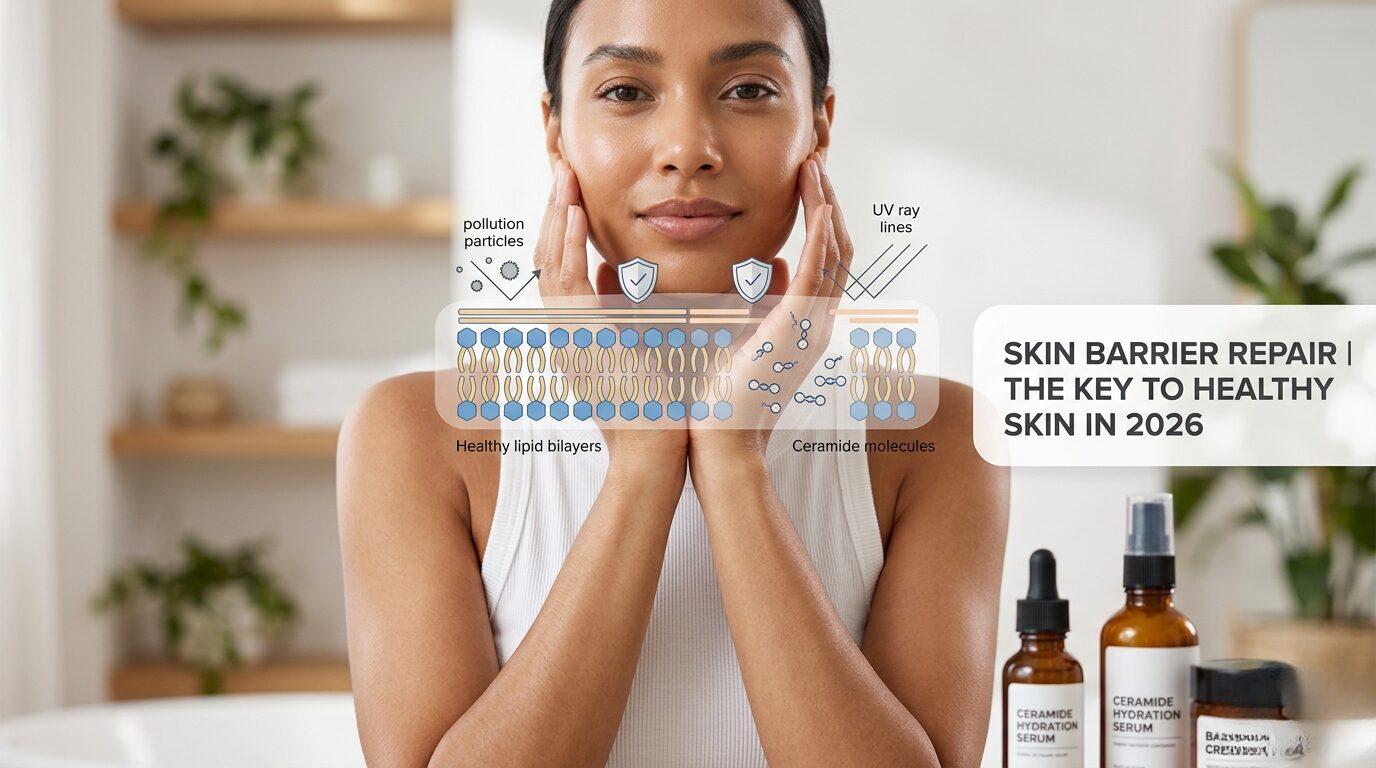
Skin Barrier Repair: Why Everyone Is Talking About It in 2026
- Kajal Singh
- March 20, 2026
- Beauty
- skin barrier repair
- 0 Comments
A decade ago, nobody said “skin barrier.” Not in magazines. Not in dermatology offices or in the comments section.
We said “exfoliate.” We said “purge.” If it stings, it’s working.
Barrier repair of the skin has become one of the hottest topics of discussion today. This was certainly not the case when it was first discussed just a few short years ago! So if you’re not aware of skin barrier repair, you are still trying to treat your skin instead of repairing it.
For years, I have been publishing articles discussing skin care trends. I have experienced the proliferation of trends over time. However, this trend is very different because it actually works.
Your Skin Has a Wall. Here’s What Happens When It Cracks.
Each brick is made up of a skin cell (bricks are the outermost layer of skin) and mortar will provide the adhesive between the bricks (the mortar consists of ceramides, cholesterol and fatty acids, together known as lipids). The purpose of the barrier between skin and the environment is to help keep moisture in and irritants out.
When your skin’s barrier is intact, you can see that your skin is clear (you can see your skin) and your skin has a nice, smooth surface (you can feel the comfort of your skin). Once your skin barrier becomes compromised (cracked), water or moisture escapes through the cracks and does not stay inside the skin while at the same time, allowing for bacteria to invade. Thus, when your skin barrier is compromised (cracked), all the aforementioned signs of skin (red, tight, breakout) occur.
How to Know Your Barrier Is Shot
People walk around thinking they have “sensitive skin.” Usually, they don’t. They have damaged skin. They wrecked their own wall and never stopped to fix it.
Here are the classic damaged skin barrier signs:
- Your moisturizer stings.
- Your skin feels tight an hour after you moisturize. That’s water loss. You’re leaking.
- You’re red in patches, especially around the nose and cheeks.
- You’re breaking out and dry at the same time. That’s not a skin type. That’s a broken barrier.
- Your texture looks crepey, rough, like paper.
If any of that sounds familiar, your skin isn’t asking for a new serum. It’s asking for a break.
Why 2026 Is the Year We Finally Got It
Two things happened.
First, we wrecked ourselves. The 2010s were a war on skin. Ten-step routines. Exfoliants morning and night. Retinoids layered with acids. We thought more was more.
Second, the science caught up. We now know exactly how to repair skin barrier. It’s not complicated. You don’t need a cabinet full of products. You need the right raw materials and a little patience.
How to Repair Skin Barrier (The Simple Version)
The first thing I do to help someone restore their barrier is to suggest they stop doing things. No actives, no exfoliants and no tools. For two weeks, you will do a simple skin barrier rebuilding routine with the following products:
Use a gentle cleanser. If it has bubbles (like shaving cream) then throw it out. A cream or balmy cleanser cleans without stripping your skin. Your skin should not feel tight and “clean” after washing.
Use a moisturizer. Your moisturizer needs ceramides, cholesterol and fatty acids. Those are your “mortar.” Without these three things, you are just painting over a wall with holes in it.
Use sunscreen every morning. The barrier on your skin will break down if you do not wear sunscreen. If you do not wear sunscreen, nothing else is going to work.
That’s the routine. Boring, but effective.
Also, Read: Glass Skin vs Cloud Skin: Which Trend Is Taking Over in 2026
Best Ingredients for Skin Barrier Repair
When you shop, ignore the fancy names on the front of the bottle. Flip it over. Look for these:
Ceramides. Non-negotiable. They are literally what your barrier is made of.
Niacinamide at 2–5%. Higher percentages can sting a broken barrier. This percentage helps your skin make its own ceramides.
Panthenol (B5). Calms the sting. Hydrates.
Squalane. Mimics your skin’s natural oil. Softens without clogging.
Centella (cica). If redness is your main issue, this is your fix.
Those are the best ingredients for skin barrier repair. Everything else is marketing.
The Hard Part Nobody Talks About
Here’s the truth: fixing your barrier is boring. And slow.
The first week, you’ll look at your simple routine and feel like you’re doing nothing.
If you stop the damage and give it what it needs, you’ll see real change in about a month. Not overnight. Not in a week.
Your skin stops stinging. It stops reacting to everything. It feels comfortable in your own face. That’s the win.
One Last Thing
For years, we measured a good skincare routine by how much it burned. We thought if it hurt, it meant something was happening.
That was wrong.
Skin that can handle weather changes. Skin that doesn’t freak out when you try a new product.
If you’re seeing damaged skin barrier signs, stop fighting. Strip it back. Follow a simple skin barrier repair routine. Use the best ingredients for skin barrier repair.